The Energy Challenge in Bangladesh Textiles
Bangladesh's textile and RMG sector is the backbone of the national economy, accounting for over 80% of export earnings. However, rising electricity costs and gas shortages are squeezing profit margins across the industry. A typical medium-sized textile factory in Gazipur or Narayanganj spends BDT 30-80 lakh per month on electricity alone, with electric motors consuming 65-70% of that total.
The good news is that Variable Frequency Drives (VFDs) offer one of the fastest and most reliable ways to reduce this cost. Based on SISL's installations across dozens of textile factories, we consistently see electricity savings of 25-40% on the equipped machines.
Where VFDs Save the Most in Textile Factories
1. Air Handling Units (AHUs) and HVAC Systems
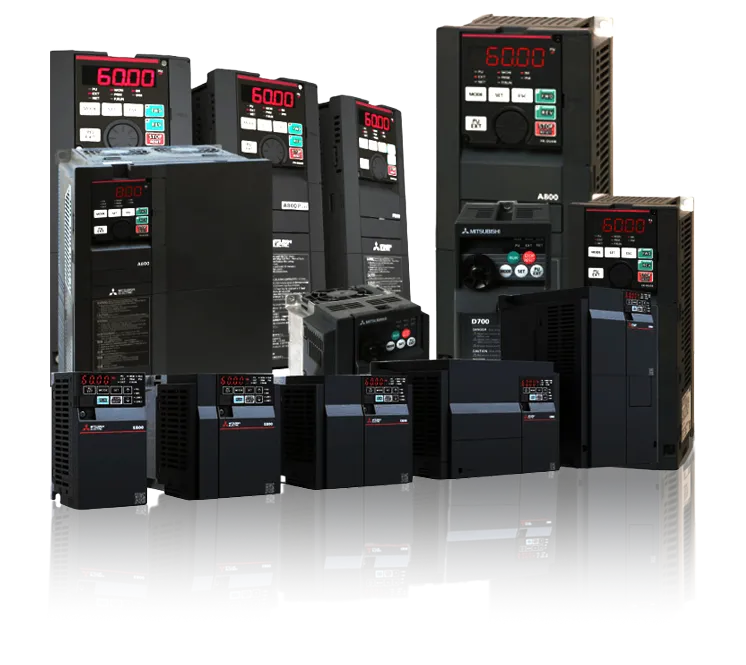
Textile production requires precise humidity and temperature control, especially in spinning and weaving sections. AHU fans typically run at full speed with dampers controlling airflow, wasting 30-40% of motor energy. Installing Mitsubishi FR-E800 series VFDs on AHU fan motors allows speed-based airflow control, saving 35-45% energy on these units.
Typical savings: A 15 kW AHU fan motor running with a VFD saves approximately BDT 18,000-25,000 per month in electricity.
2. Dyeing Machine Pumps
Dyeing machines use circulation pumps that often run at constant speed regardless of the process stage. During heating, cooling, and draining phases, the required flow rates are different. VFDs adjust pump speed to match each phase, reducing energy use by 25-35% while also improving dye consistency and reducing water consumption.
3. Air Compressors
Compressed air is used throughout textile factories for looms, jet dyeing machines, and pneumatic systems. Traditional load/unload compressor control wastes energy during unload cycles. VFD-controlled compressors (using Mitsubishi FR-A800 series for larger units) maintain constant pressure by varying compressor speed, saving 20-30% energy and extending compressor life.
4. Effluent Treatment Plant (ETP) Pumps
ETP operations involve variable flow conditions throughout the day. VFDs on ETP pumps ensure optimal flow rates during peak and off-peak periods, reducing pump energy by 25-35% while maintaining compliance with Department of Environment regulations.
Case Example: A Gazipur Knit Composite Factory
A knit composite factory in Gazipur with 15,000 spindles and dyeing capacity of 8 tons/day installed Mitsubishi VFDs across their operation:
- 6x FR-E820S VFDs on AHU fan motors (7.5-22 kW each)
- 4x FR-E820S VFDs on dyeing circulation pumps (11-15 kW each)
- 2x FR-A820 VFDs on 37 kW compressor motors
- 3x FR-D720S VFDs on smaller auxiliary pumps (2.2-3.7 kW each)
Results After 12 Months
- Monthly electricity savings: BDT 4.2 lakh (approximately 32% reduction on equipped machines)
- Total investment: BDT 22 lakh (including installation and commissioning)
- Payback period: 5.2 months
- Additional benefits: Reduced mechanical wear, softer motor starts, lower noise levels, and improved dye quality consistency
Getting Started
Every textile factory is different, and the savings potential depends on your specific equipment, operating hours, and electricity tariff. SISL offers free on-site energy assessments for textile factories in Dhaka, Gazipur, Narayanganj, Savar, and Chittagong.
Our engineers will identify the highest-impact VFD installation opportunities, calculate projected savings, and provide a detailed proposal with ROI analysis. As an authorized Mitsubishi Electric distributor, we supply genuine products with full warranty and local technical support.
Contact SISL today to schedule your free energy assessment, or use our Energy Savings Calculator to get a quick estimate of your potential savings.